
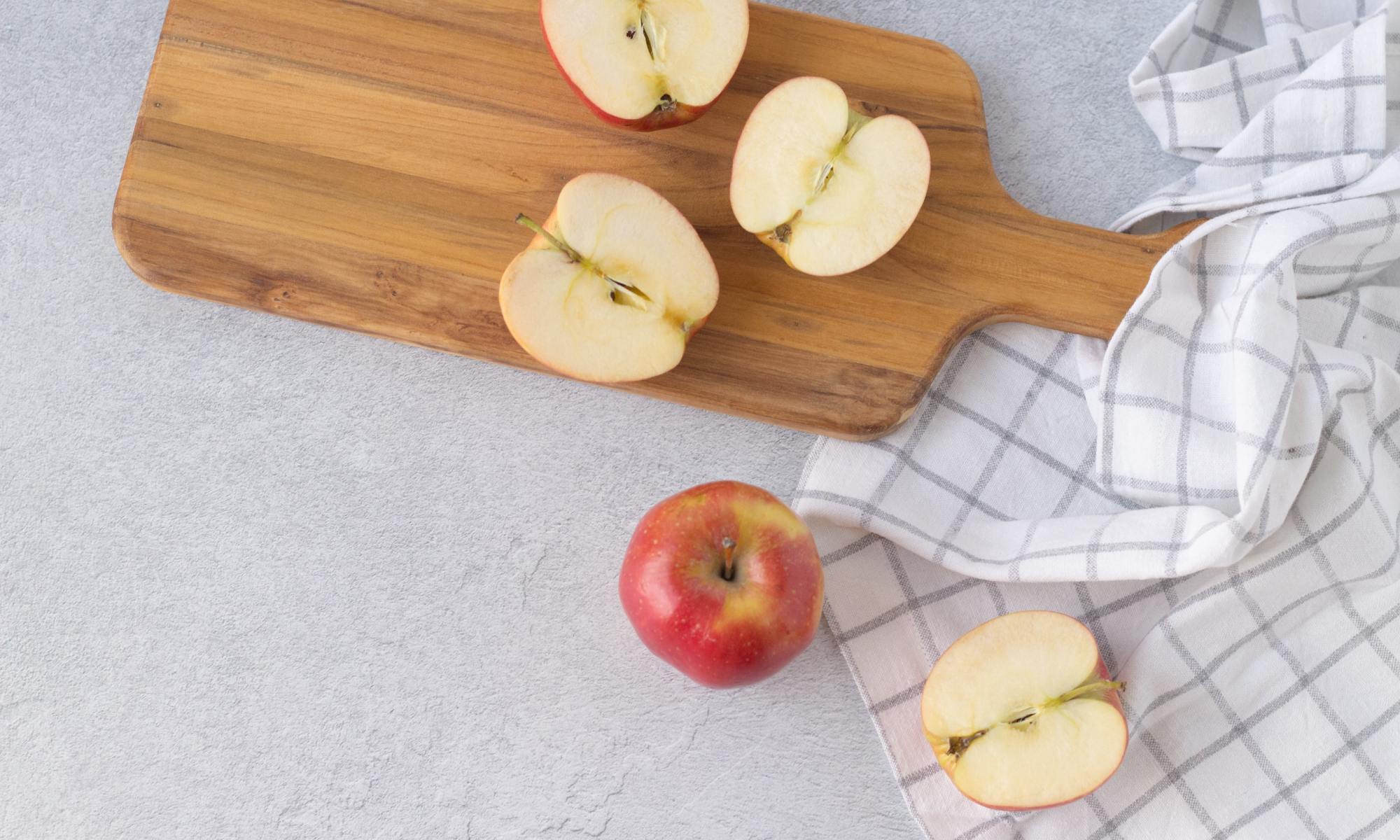
Are you an apple lover? Or do you find that while you eat them occasionally, every time you buy them they seem to add up and end up wrinkling in your fruit bowl?
I love apples, but I do go through phases of eating them as snacks and not really feeling like them (I have now taken to drying them at home as an alternative snack).
Each fortnight my partner and I have a box of fruit and vegetables delivered by a local grocer and each week there are a nice selection of apples. Unfortunately, those apples began to pile up. Given that I wanted to challenge myself this year to produce less food waste and to utilise as much of what I buy as possible before turning to the compost or the bin, I needed to figure out a way to use up the entire apple, scraps and all.
Solution #1 – Chop up all the apples and stew with some honey and cinnamon to create a great breakfast option for the coming week.
But the scraps…
Solution #2 – Make my own Apple Cider Vinegar (ACV).
I use ACV regularly as a hair rinse and try to incorporate it into my cooking where I can, so this was a great option. I also just love trying out new things and seeing how they go.
I enlisted the assistance of my partner to core, peel and chop all the apples left in the fruit bowl. The chopped apples were stewed with a bit of honey and cinnamon for the aforementioned breakfast option, while the cores and skins were set aside (normally I would suggest leaving the skins on your apples for stewing but some of the skins were looking a bit old and waxy I wanted as much as possible for this project).


To make your own ACV you will need:
Apple scraps
One large jar and one small jar (cleaned and sterilised)
Raw sugar
Distilled water, enough to fill your large jar
Cheesecloth – If you don’t own cheesecloth you can also use a fine mesh bag such as a produce bag, cotton fabric or even a pair of stockings. (1)
The Process:
- Clean all your apples to remove any dirt/pesticides that might be on the skins.
- Peel and core your apples and fill a large jar with all the scraps to be about ¾ full.
- In another jar or jug mix distilled water (I just used water from the tap) and add one Tbsp sugar (the ratio should be about one Tbsp to each cup of water).
- Add water/sugar mix to the jar of scraps until the water is above the level of scraps.
- If you find that the scraps keep floating to the surface, which in many cases they will, find a small jar/cup to place on top of the scraps to ensure they don’t rise above the water level.
- To finish off, place your cheesecloth over the lid of the jar and secure with a rubber band, string or an open lid such as those you can find with mason jars.
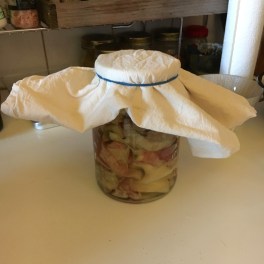
- Place the jar in a cool dark place, such as the back of your pantry or under the sink and leave for two weeks, stirring once or twice a day to move the apples around.
- After two weeks the apple scraps should have sunk to the bottom of the jar, this means they have done their job and they can be scooped out.
- In my batch I had so many scraps they filled the whole jar, so nothing really sank to the bottom. In the next batch I think I’ll start with less apple scraps so it’s more clear when this happens.
- Once you have strained the liquid from the scraps using your cheesecloth, or cheesecloth replacement, return the liquid to the jar and re-cover, returning it to the same dark place it made home for the last few weeks.
- Leave your ACV mix for 3-5 weeks stirring regularly with your wooden spoon (don’t worry if you forget to stir from time to time as I did this as well). After the first month, taste the vinegar regularly until it reaches the acidity that you like. (2)
- Once you have the vinegar to your liking, transfer it to a clean sterilised jar with an airtight lid and store in the fridge and keep it there until it’s done. If you store at room temperature in the pantry, it will likely continue to ferment. (3)
If at any point during this process you notice scum forming on top of the jar, skim it off and discard it. (4)
Some people like to chop up whole apples and use those, however, you can’t use the apples once they’ve been used for the fermentation and for me this process is more about avoiding putting our food in the bin and using every little bit of fruit I can!
Who knows, once you start on the journey you may not be able to stop making the most of your food scraps!
Flash forward to this week…
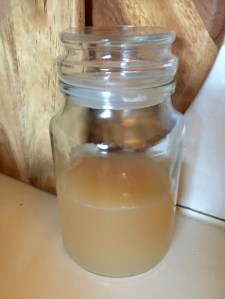
After straining out the apples and storing the vinegar back in the pantry I checked on it a couple of times. During one of these stirring occasions, I may have forgotten to secure the lid so that it was airtight or the fermentation popped it off, as the lid wasn’t a screw on style, and after recently checking on it this is what I found….

I did a bit of Googling and found in most cases if your vinegar has a drastic change in colour it is likely to have gone bad, although it is said that it is hard for vinegar to go bad. (5)
As a safety precaution, because I have never made this before, I decided to get rid of my first attempt rather than consume it, which disappointingly did the exact opposite with my apple scraps than was intended.
So my first attempt at creating my own ACV at home was not a success in the end, however, with every hiccup we live and we learn and with all this upcoming time to be spent at home there will be plenty more opportunities to attempt it again and to pay more attention to the process. So stay tuned for ACV attempt #2.
If you need something to do at home during self isolation, why not try your own vinegar, or check out my Skincare post from last year with a few DIY recipes you can try.
- https://www.thespruceeats.com/what-to-use-if-you-dont-have-cheesecloth-1388022
- http://talesofakitchen.com/raw/homemade-organic-raw-apple-cider-vinegar/
- https://www.wikihow.com/Make-Apple-Cider-Vinegar
- https://www.theprairiehomestead.com/2015/02/how-to-make-apple-cider-vinegar.html
- https://www.canitgobad.net/can-apple-cider-vinegar-go-bad/
 Ronnie